
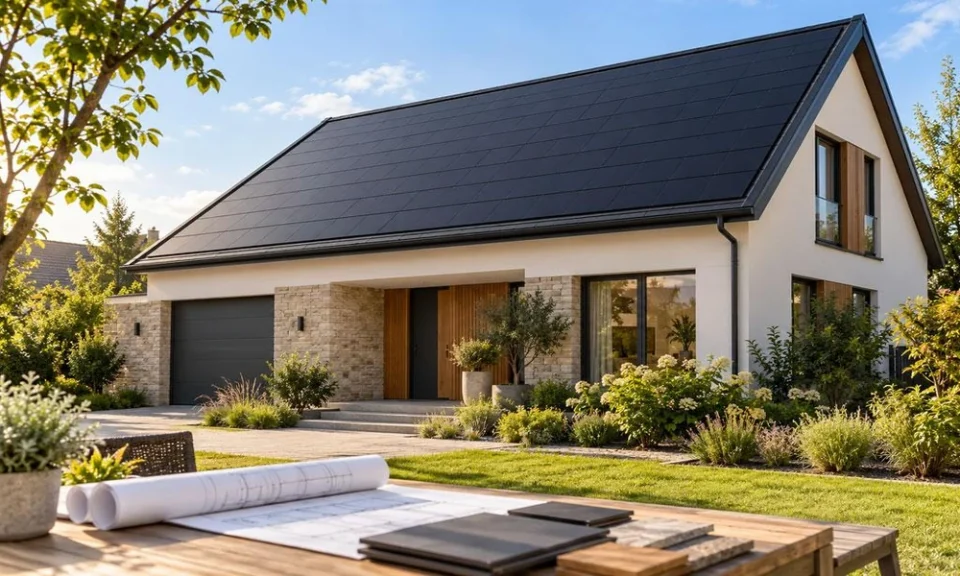
Replacing a roof involves decisions about materials, appearance, weather protection and long-term maintenance. It also creates an opportunity to consider how the building could generate electricity. For homeowners exploring solar during a renovation, building-integrated photovoltaics, or BIPV, deserves a place in the discussion. Understanding how it fits into the wider roofing project can help you ask better questions before choosing a supplier.
BIPV combines electricity generation with a building function. Depending on the system, photovoltaic elements can serve as roofing, façade cladding or shading components. Conventional rooftop panels generally sit above an existing roof, while integrated products become part of the building itself. The U.S. Department of Energy’s introduction to BIPV describes applications ranging from roofs and skylights to façades and awnings.
Begin with the condition and layout of your home. Ask a roofing professional to assess the existing structure and identify any repairs that should be included in the renovation. A solar specialist should separately evaluate sunlight, nearby obstructions and the proposed installation area. Request a site-specific assessment rather than assuming that an attractive example photographed on another property will deliver similar results on yours.
Next, establish how the roofing and electrical work will be coordinated. Ask who is responsible for the junctions between photovoltaic elements and surrounding roofing, how rainwater will be managed, and where electrical equipment will be located. Request drawings that show edges, penetrations and connections. These details deserve attention before construction starts, when changes can still be incorporated into the design and quotation.
Appearance is another useful discussion point. Ask to see the proposed product alongside samples of your roof covering, gutters and exterior finishes. Consider module spacing, visible borders and how inactive areas will be treated. A coordinated layout can help the installation look intentional. Photographs of completed projects using the same product can provide more useful guidance than a generic rendering.
Materials inside the module also contribute to its appearance. All-black encapsulation materials developed for BIPV applications give component manufacturers options when developing photovoltaic products with coordinated dark surfaces. Homeowners would select the completed roofing or module system, while its manufacturer determines and validates the internal material combination. Ask your supplier how the finished product’s appearance is controlled across different production batches.
Compare proposals using the same project scope. Request separate explanations of roofing work, electrical equipment, installation, expected generation and future servicing. Ask which assumptions support the energy estimate and whether the quotation includes all necessary building interfaces. A comparison becomes much more useful when each contractor explains what is included, what requires further assessment and who will complete each part of the work.
Finally, discuss repairs before approving the design. Ask how an individual damaged element would be accessed and replaced, whether matching replacements are available, and which party would handle a roof leak or electrical fault. Keep drawings, product details and warranty documents together. Before signing, request one written schedule identifying the roofing contractor, electrical installer, system supplier and the contact responsible for coordinating any work that crosses their responsibilities.
