
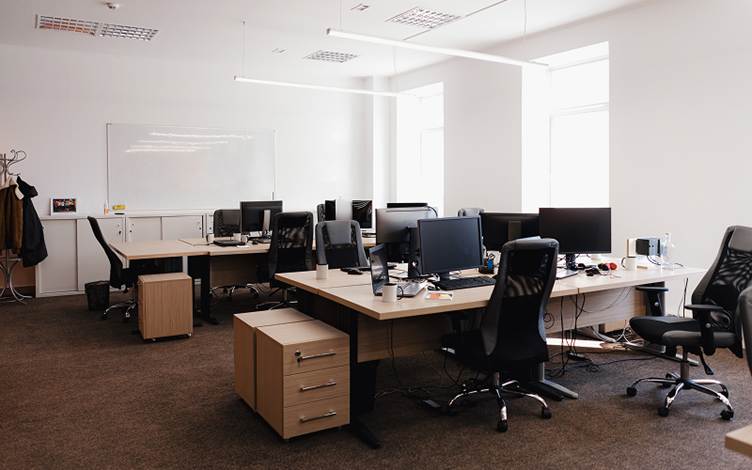
Interior office design in Singapore is no longer just about aesthetics; it directly supports operational needs, client trust, and brand positioning. This instance is especially true for service-centric industries like law firms, medical clinics, and creative agencies. Each industry has unique functional requirements, legal considerations, and client expectations that influence its strategy for commercial interior design in Singapore.
Law Firms: Prioritising Confidentiality and Gravitas
The interior office design for law firms must reflect authority, discretion, and professionalism. Clients who visit legal offices expect to be in a secure, private setting where sensitive conversations are treated with care. Due to this, enclosed offices remain standard for legal teams, with sound-insulated meeting rooms being a non-negotiable requirement.
Reception areas tend to be formal, often using darker wood finishes, leather furniture, and neutral colour palettes to create a sense of gravitas. Branding is subtle; law firms typically avoid flashy logos or bold colour schemes in favour of understated wall signage or monogrammed elements. Filing systems are still widely used, so cabinetry and storage are integrated into the spatial plan.
Many law offices in the city-state occupy prime CBD buildings, making commercial interior design consultants navigate space constraints and building restrictions. Designers often opt for modular layouts that can accommodate firm growth or team restructuring. Advanced lighting systems are also incorporated to reduce eye strain during long case preparation sessions.
Medical Clinics: Balancing Hygiene with Comfort
Clinics must adhere to strict hygiene protocols, which deeply influence design decisions. Similarly, the space must put patients at ease, especially in paediatric, aesthetic, or specialist practices. The challenge lies in blending sterile surfaces with a calming ambience.
Clinic fit-outs must consider MOH (Ministry of Health) compliance, including washable flooring, designated dirty-to-clean workflows, and proper placement of sinks and medical gas outlets. Materials like vinyl flooring, compact laminate surfaces, and anti-microbial paints are standard in treatment zones.
However, public-facing areas, like waiting rooms, are treated more warmly. Designers use biophilic elements, gentle lighting, pastel tones, and soft seating to reduce anxiety. Digital check-in counters, queue management displays, and kids’ play areas are increasingly integrated into GP and dental clinics.
Commercial interior design for private practices also includes considerations like accessibility for older patients, flexible consultation rooms, and discreet back-of-house staff zones. The overall goal is to design a practice that is both functionally compliant and emotionally reassuring.
ALSO READ: How to Adapt Office Layouts Across Different Workspaces
Creative Agencies: Function, Flow, and Flexibility
Creative agencies such as branding firms, design studios, or media companies take a more experimental approach to interior office design. Here, the workspace becomes a brand statement. Offices are often open-concept, featuring breakout zones, project pin-up walls, and cafe-style meeting corners.
Commercial interior design for agencies often leans into adaptive layouts: hot-desking, mobile partitions, and communal brainstorming areas. Bold colours, exposed ceilings, and graphic murals are common. The design conveys the agency’s energy, creativity, and non-traditional work culture to both clients and staff.
Despite the casual aesthetic, functionality is not compromised. Acoustic zones, task lighting, and ergonomic furniture are critical in maintaining productivity. Tech integration is also key; agencies require collaborative tools, digital screens, and podcast booths. Many Singapore-based agencies house clients during pitch sessions, so the design includes versatile presentation spaces with movable seating and dynamic lighting.
The design, particularly for smaller agencies leasing shophouses or heritage units, also needs to honour conservation requirements, creating added complexity in balancing old-world charm with digital-era workflow.
Sector-Specific Design Matters
Interior office design is not one-size-fits-all. Each industry in the city-state’s highly competitive business environment has its own set of expectations, legal constraints, and space-use habits that must be carefully interpreted through design. Whether it’s a law firm that requires discretion and order, a clinic that demands sterile functionality without losing human warmth, or an agency that needs to express brand personality through its physical space—commercial interior design must adapt accordingly.
Working with a design partner that understands these nuances is critical for creating spaces that go beyond visual appeal and into real operational support.
Contact Raw Design Consultants to optimise your firm’s or clinic’s workspace today.
